
“Russlanddeutsche. Ausgang”
The deportation of the Russian Germans – a series of 20 oil paintings
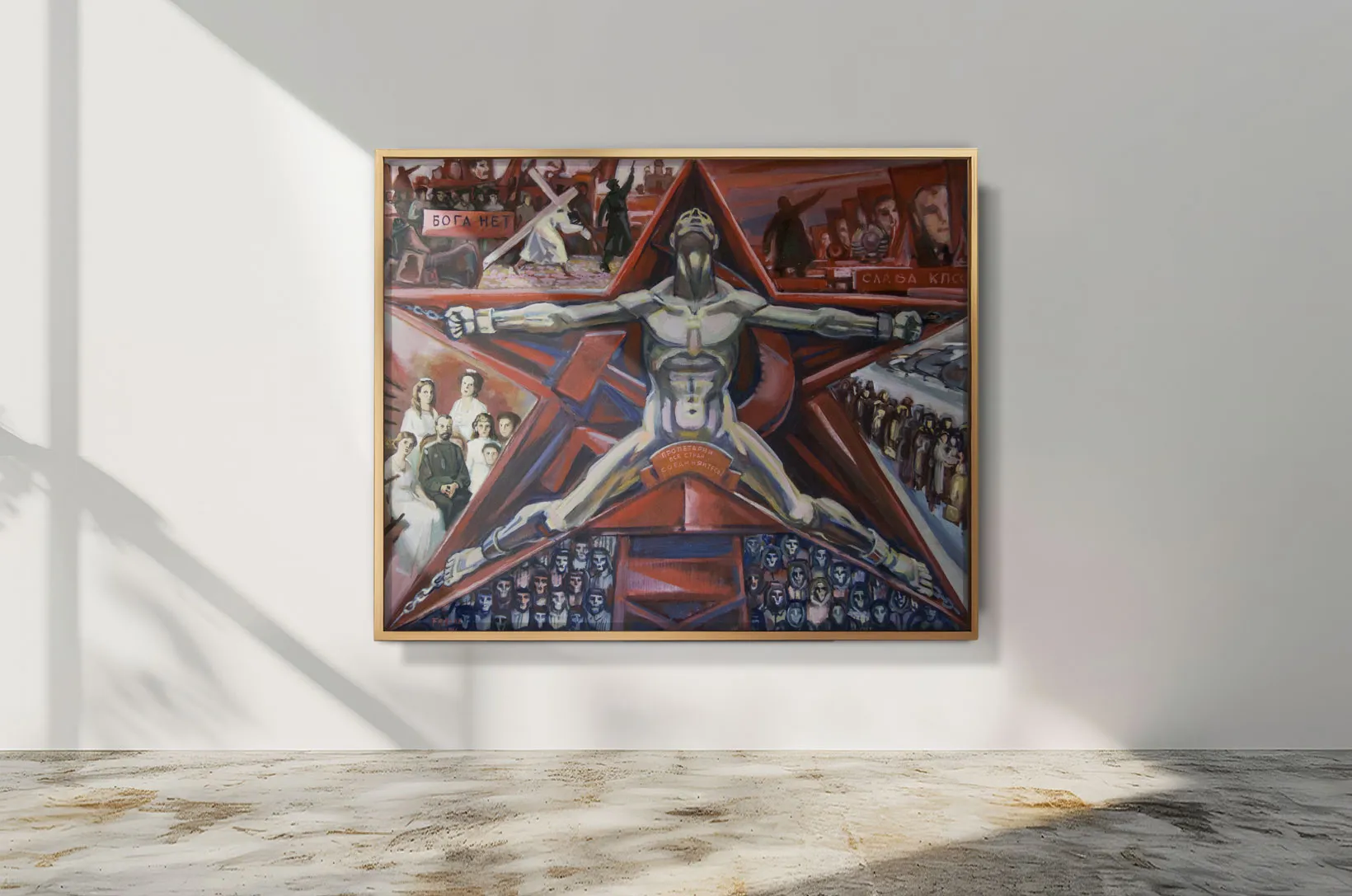
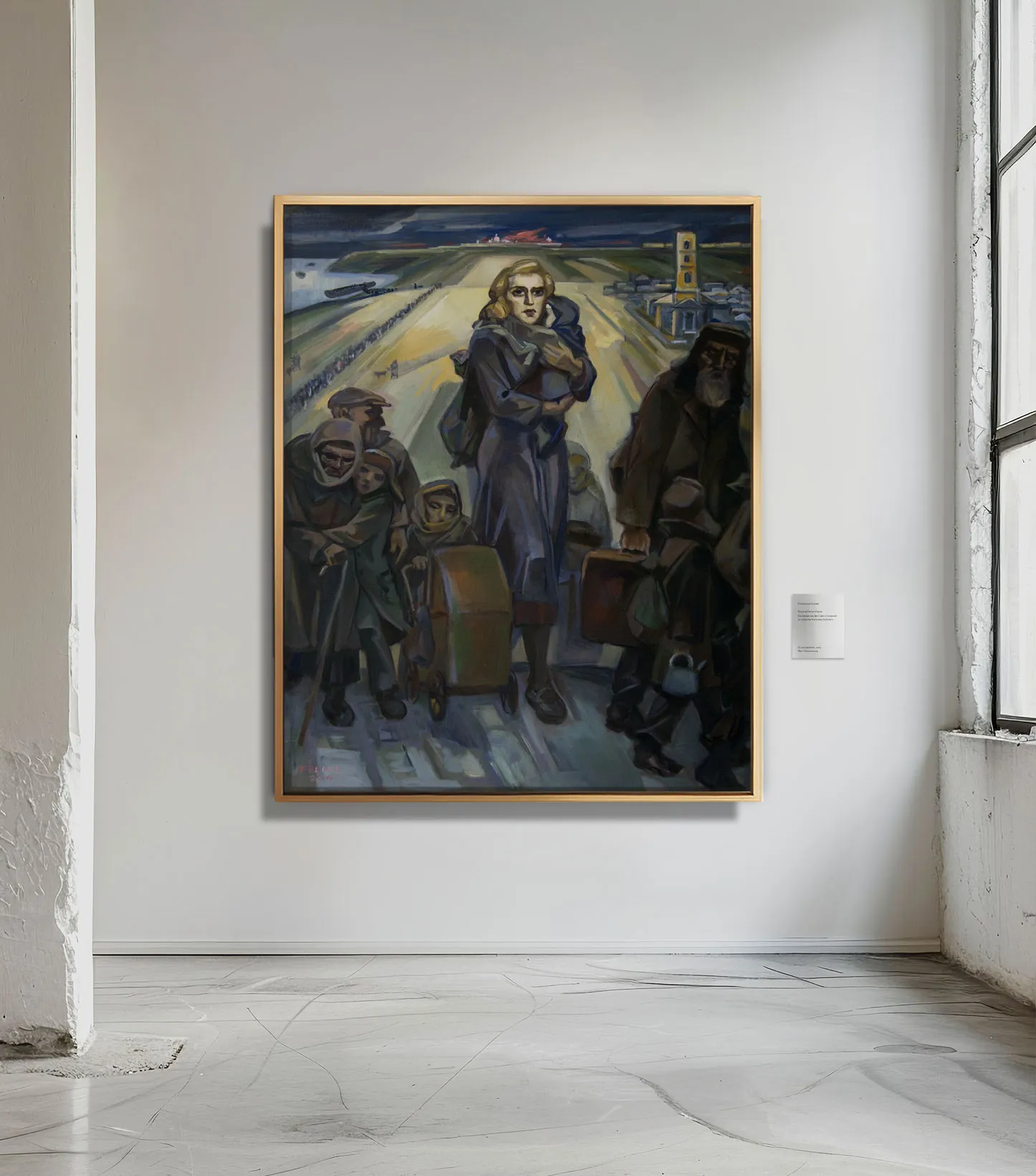
In twenty oil paintings, Helmut Frelke’s series “Russlanddeutsche. Ausgang” depicts the deportation, forced labour and persecution of the Russian Germans in the 20th century. Frelke was born in Krupskoje in 1951, ten years after his family had been deported to Kazakhstan – an origin that shapes his artistic work to this day.
His works combine realist painting with theatrical composition and document the traumatic experiences of expulsion, forced labour and loss. With powerful scenes, the Berlin artist recalls a little-known chapter of European history.
The series can be requested for exhibitions in museums, parishes and institutions. Get in touch
Download exhibition portfolioPDF in German · 12 pages · 1 MB
Artistic background
Helmut Frelke, born in Krupskoje in 1951, comes from a family that was deported to Kazakhstan in 1941. After his training in Leningrad (now Saint Petersburg) and his work as a stage designer, he increasingly devoted himself to painting in Germany. His works on the history of the Russian Germans show monumental scenes full of movement, symbolism and empathy – an artistic bridge between past and present.
Images of a suppressed history
In this series, Helmut Frelke draws on the forms of expression of theatre painting. His large-format compositions look like stage sets of human history – they tell of the fate of an ethnic group that was once invited into the country by the tsars and later deprived of its rights under Soviet rule.
The scenes weave personal and collective memory into a striking panorama of emigration, suffering and return. Between the images lie decades full of hope, loss and new beginnings.
Article “75 Jahre Deportation – Mit der Kunst den Betrachter wachrütteln” (in German)